Your First Time in Ubud: What to See, Eat, Explore, and Know Before You Go. There is something special about arriving in Ubud for the first time. Unlike Bali’s busy beach destinations, Ubud welcomes you with a completely different atmosphere.
The sound of motorbikes mixes with traditional gamelan music, small flower offerings decorate the sidewalks, and the scent of incense drifts from family temples along the streets.
One moment, you’re walking past a traditional Balinese house, and the next, you find yourself looking out over endless green rice terraces or enjoying a quiet coffee surrounded by tropical jungle.
For many travelers, Ubud is where they begin to understand another side of Bali. It’s not just about beautiful scenery. It’s about local traditions, spiritual experiences, art, food, and the slower rhythm of everyday Balinese life.
If this is your first visit, there’s plenty to discover. From exploring ancient temples and walking through rice fields to tasting authentic Balinese dishes, this guide covers what to see, where to go, what to eat, and the practical things worth knowing before your trip.
First Time in Ubud? Here Are a Few Things to Know
Before filling your itinerary with attractions, it’s worth understanding a little about local customs and daily life in Ubud.
Dress appropriately when visiting temples: Most sacred sites require visitors to wear a sarong and sash, with shoulders covered. Rentals are generally available at the entrance.
Bring some cash: Indonesian rupiah is useful for traditional markets, small warungs, parking fees, and local shops. Not every business accepts cards.
Respect daily offerings: Small arrangements of flowers, leaves, and incense called canang sari are placed outside homes, shops, and temples. Avoid stepping on them.
Check the Nyepi calendar: Nyepi is Bali’s annual Day of Silence. During this 24-hour period, the island comes to a complete standstill, including airport operations.
Bargaining is part of market culture: At places like Ubud Art Market, negotiating prices is common. Be friendly and reasonable when making an offer.
Allow extra travel time: Ubud traffic can be surprisingly busy, particularly around the town center and popular tourist attractions.
These small details can make your first visit much more comfortable and help you enjoy Ubud while respecting the local community.
When Is the Best Time to Visit Ubud?
Ubud is a year-round destination, but the weather can influence the kind of experiences you’ll enjoy.
Bali generally has two seasons: dry and rainy. Both have their advantages, depending on whether you prefer outdoor adventures, greener landscapes, or fewer tourists.
Dry Season: April to October
For first-time visitors, the dry season is usually the easiest time to explore Ubud.
Rainfall is generally lower, making it easier to visit rice terraces, temples, waterfalls, and countryside attractions. June, July, and August are particularly popular, although these months can also bring more visitors.
If you prefer a balance between pleasant weather and fewer crowds, April and May are worth considering.
Early mornings are especially enjoyable. You can walk through the rice fields, visit temples before the busiest hours, or take in the countryside views without the midday heat.
Rainy Season: November to March
The rainy season brings a different kind of beauty to Ubud.
The surrounding jungle becomes lush, rice fields turn vibrant green, and the countryside feels especially tropical. Accommodation may also offer better rates compared with the busiest months.
Rain showers are often concentrated in the afternoon, although weather conditions can vary. Planning outdoor activities in the morning is a practical approach.
Just remember to bring a light rain jacket and comfortable shoes, especially if you plan to explore muddy trails or countryside paths.
5 Must-Visit Attractions in Ubud for First-Time Travelers
If you only have a few days in Ubud, these five places offer a wonderful introduction to the area’s culture, landscapes, and natural beauty.
1. Ubud Palace – Discover Bali’s Royal Heritage

Located in the heart of town, Ubud Palace, locally known as Puri Saren Agung, is one of the easiest attractions to visit.
The palace features traditional Balinese architecture, detailed stone carvings, decorative gates, and beautifully designed courtyards. Even a short visit offers a glimpse into Bali’s royal history and artistic traditions.
However, don’t rush away after taking a few photographs. Ubud Palace is also a popular venue for traditional Balinese dance performances in the evening.
Depending on the performance schedule, you may see Legong, Barong, or other traditional dances accompanied by live gamelan music.
Traveler tip: Arrive early if you want a comfortable seat for the evening performance. You can also combine your visit with Ubud Art Market, located directly across the street.
2. Tegallalang Rice Terraces – Experience Bali’s Famous Green Landscape

The Tegallalang Rice Terraces are one of those places that look impressive in photographs but feel even more memorable when you see them in person.
Located approximately 20 minutes north of central Ubud, these beautiful stepped rice fields showcase the traditional agricultural landscape of Bali.
What makes the terraces particularly interesting is the ancient subak irrigation system. This traditional water-management practice connects local farmers through a cooperative system and reflects the relationship between agriculture, community, and Balinese Hindu philosophy.
Take your time walking along the narrow paths, enjoy the panoramic views, and stop at one of the small cafes overlooking the rice fields.
You may also find popular Bali swings and photo spots around the area.
Traveler tip: Visit in the early morning when temperatures are cooler and tour groups are generally fewer. The appearance of the rice fields changes depending on the planting and harvesting cycle, so the landscape may not always look equally green.
3. Tirta Empul Temple – Experience Bali’s Spiritual Side
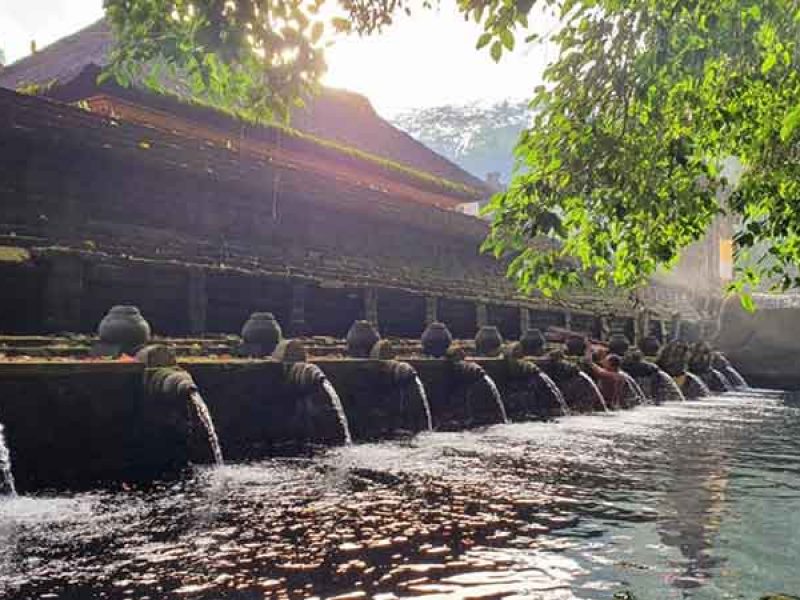
If you want to experience more than Bali’s scenery, Tirta Empul Temple is a meaningful place to include in your itinerary.
Located in Tampaksiring, around 30 minutes from central Ubud depending on traffic, this sacred water temple is famous for its natural spring water and traditional purification ritual known as melukat.
Inside the temple complex, you’ll find a series of bathing pools with fountains where Balinese Hindus perform purification ceremonies. Each fountain has its own traditional significance.
Visitors may also participate in the purification ritual, provided they follow temple guidelines and respect local customs.
Even if you don’t take part in the ceremony, walking through the temple complex is an interesting cultural experience.
Traveler tip: Wear modest clothing and use the required sarong and sash. If you plan to participate in the purification ritual, ask about the correct procedure before entering the bathing area.
4. Goa Gajah – Explore an Ancient Archaeological Site

Goa Gajah, often called the Elephant Cave, is another fascinating destination just outside Ubud.
Despite its name, you won’t find elephants here. Instead, the attraction is known for its mysterious cave entrance, which features an impressive carved face with an open mouth.
Step inside and you’ll discover a small sacred space containing ancient religious symbols. The wider archaeological complex also features stone bathing pools, statues, gardens, and remnants of Hindu and Buddhist heritage.
The surroundings are equally interesting, with stone pathways leading down toward a lush river valley.
You don’t need an entire afternoon to explore Goa Gajah, making it an easy addition to a half-day Ubud itinerary.
Traveler tip: Allow approximately one hour for your visit, including time to explore the gardens and surrounding archaeological area.
5. Campuhan Ridge Walk – Enjoy a Peaceful Morning in Nature

Sometimes, the best Ubud experience doesn’t involve a ticket or a tour guide.
Campuhan Ridge Walk is a scenic walking trail offering beautiful views of green hills, tropical vegetation, and the valleys surrounding Ubud.
The route stretches for approximately two kilometers and is particularly popular among travelers looking for a relaxing outdoor activity.
Unlike the busy streets of central Ubud, the atmosphere here feels much quieter. You can enjoy the fresh morning air, take photographs, or simply appreciate the natural surroundings.
The trail is relatively accessible, although some sections may become slippery after rainfall.
Traveler tip: Go early in the morning or late in the afternoon to avoid the strongest sunlight. Bring drinking water and wear comfortable walking shoes.
Recommended tour in Ubud
- Ubud Waterfall, Rice Terraces and Monkey Forest Tour
- Ubud Tour – Best of Ubud – All Inclusive
- Luwak Coffee Plantation Ubud Bali Tour
- Best of Ubud Tour with Jungle Swing
- Bali UTV Buggy Ride – The Ultimate UTV Experience
3 Ubud Neighborhoods Worth Exploring
Ubud is more than its famous attractions. Some of its most memorable experiences can be found in the smaller streets, traditional villages, and quieter neighborhoods.
If you have extra time, explore these three areas.
1. Penestanan – A Relaxed Neighborhood with an Artistic Atmosphere
Penestanan is located west of central Ubud and has a noticeably slower pace.
The neighborhood is popular with artists, yoga enthusiasts, digital nomads, and travelers who enjoy spending time away from busy tourist streets.
You’ll find small art studios, independent cafes, yoga spaces, and restaurants overlooking rice paddies.
It’s also a pleasant area to explore on foot, particularly if you’re coming from the Campuhan Ridge Walk.
If your idea of a perfect Bali afternoon involves good coffee, beautiful views, and no particular schedule, Penestanan is worth visiting.
2. Ubud Center – The Best Base for First-Time Visitors
For travelers visiting Ubud for the first time, staying around the town center is one of the most convenient choices.
Many popular attractions are within walking distance, including Ubud Palace, Ubud Art Market, Saraswati Temple, and numerous restaurants and cafes.
The area is lively throughout the day, with shops, spas, galleries, and traditional Balinese restaurants lining the streets.
The downside is traffic. Jalan Raya Ubud and nearby roads can become crowded, especially during the afternoon.
A useful tip is to explore the smaller side streets. They often reveal quieter cafes, family-run restaurants, and interesting local shops.
3. Nyuh Kuning – A Traditional Village Away from the Crowds
If you prefer a more peaceful atmosphere, Nyuh Kuning is an excellent neighborhood to explore.
Located south of central Ubud, this traditional village is close to the Sacred Monkey Forest but maintains a quieter residential character.
Its streets are lined with traditional Balinese homes, family-owned businesses, woodcarving workshops, and small local restaurants.
Walking around Nyuh Kuning gives you a different perspective on everyday life in Bali, away from the busiest tourist areas.
It’s also a nice place to stay if you want a quieter environment while remaining close to Ubud’s main attractions.
What to Eat in Ubud: 5 Local Dishes You Shouldn’t Miss
One of the best ways to experience Ubud is through its food.
The local cuisine combines aromatic spices, fresh vegetables, coconut, herbs, and traditional cooking techniques. You don’t have to visit expensive restaurants to enjoy it, either.
Some of the most satisfying meals can be found at small family-run restaurants known as warungs.
Here are five Balinese and Indonesian dishes worth trying during your visit.
1. Nasi Campur – A Little Bit of Everything
Nasi campur is an excellent starting point if you’re unfamiliar with Indonesian food.
The dish consists of steamed rice served with several small portions of different side dishes. Depending on the restaurant, you might find chicken, vegetables, tempeh, peanuts, sambal, and crispy shallots.
Every warung has its own combination, so ordering nasi campur can be a different experience each time.
It’s affordable, filling, and a great way to sample several flavors in one meal.
2. Babi Guling – Bali’s Famous Roast Pork
Babi guling is one of Bali’s most recognizable traditional dishes.
A whole pig is seasoned with a mixture of local spices, herbs, and aromatic ingredients before being slowly roasted over an open fire.
The result is tender meat with crispy skin and a distinctive Balinese flavor.
It is commonly served with rice, vegetables, lawar, and spicy sambal.
If you eat pork, this is one local specialty worth trying during your stay in Ubud.
3. Satay Lilit – A Different Kind of Indonesian Satay
Unlike the familiar chunks of meat served on bamboo skewers, satay lilit uses seasoned minced meat mixed with grated coconut and Balinese spices.
The mixture is wrapped around a lemongrass stick or bamboo skewer before being grilled over charcoal.
Chicken, fish, and pork are common ingredients, depending on the restaurant.
The result is fragrant, savory, and slightly smoky, with a delicious aroma from the lemongrass.
4. Lawar – Traditional Balinese Flavors
Lawar is a traditional Balinese dish made from finely chopped vegetables, grated coconut, minced meat, and a mixture of local spices.
It is commonly served alongside babi guling or other traditional meals.
Recipes vary between villages and restaurants, giving each version its own character.
Some varieties contain meat and other animal ingredients, so it’s worth asking about the preparation if you have dietary preferences.
5. Gado-Gado – A Delicious Vegetarian Choice
If you prefer something lighter or don’t eat meat, gado-gado is a popular option.
This Indonesian dish combines steamed vegetables, tofu, tempeh, and sometimes boiled eggs, all covered with a rich peanut sauce.
It is nutritious, satisfying, and widely available at local restaurants and food stalls.
Just remember to check the ingredients if you follow a strict vegetarian or vegan diet.
How to Get to Ubud from Bali Airport
Most international visitors arrive at Ngurah Rai International Airport (DPS), located in southern Bali.
From the airport, Ubud is approximately 35–40 kilometers away, and the journey usually takes around 1.5 hours. However, travel time can increase significantly during busy traffic periods.
There are several ways to reach Ubud.
Private Airport Transfer
For a comfortable and straightforward arrival, booking a private airport transfer is a convenient option.
Your driver can meet you at the airport and take you directly to your hotel without the need to arrange multiple transportation options.
This is particularly useful if you’re traveling with family, carrying several suitcases, or arriving late at night.
Book Airport Transfers with private service
Grab and Gojek
Grab and Gojek are two popular ride-hailing services in Bali.
You can book a car through their mobile applications and see the estimated fare before confirming your trip.
However, airport pickup arrangements may involve designated collection areas, so check the instructions in the application.
Airport Taxi
Official airport taxi services are also available.
Before starting your journey, confirm the fare and destination with the driver to avoid misunderstandings.
Getting Around Ubud: Walking, Scooters, or Private Drivers?
Transportation in Ubud is relatively straightforward, but the best option depends on where you want to go.
Exploring the Town on Foot
Central Ubud is quite walkable.
You can easily explore Ubud Palace, the traditional market, Saraswati Temple, and nearby restaurants without needing a vehicle.
Walking is also one of the best ways to discover smaller shops, traditional architecture, and local streets.
However, some sidewalks are narrow or uneven, so comfortable footwear is recommended.
Renting a Scooter
Scooters are a popular way to explore Bali because they offer flexibility and are relatively affordable.
They can be useful when visiting places outside the town center, especially if you already have experience riding a motorcycle.
However, Ubud’s roads can be narrow, busy, and unpredictable. Only rent a scooter if you’re confident, properly licensed, and familiar with local traffic conditions. Always wear a helmet.
Hiring a Private Driver
If you want to visit several attractions in one day, hiring a private driver is often the most comfortable choice.
You can arrange a route covering Tegallalang Rice Terraces, Tirta Empul Temple, Goa Gajah, and other nearby attractions without worrying about navigation or parking.
For couples, families, or small groups, sharing the cost can also make a private driver a practical option.
Explore Ubud with private service? Select your car here
What to Avoid During Your First Visit to Ubud
Ubud is generally welcoming to visitors, but a little cultural awareness and common sense will help you avoid unnecessary problems.
Here are some things worth remembering:
Don’t step on religious offerings: Canang sari are part of daily Balinese Hindu traditions. Watch where you walk, especially near shop entrances and sidewalks.
Don’t touch sacred objects without permission: Temples are active places of worship, not simply tourist attractions. Follow signs and instructions from temple staff.
Be careful around monkeys: At the Sacred Monkey Forest, keep food, sunglasses, loose accessories, and other belongings secure. Monkeys can be curious and unpredictable. Avoid touching or feeding them.
Don’t underestimate road conditions: Traffic can be busy, and some roads are narrow. Avoid renting a scooter if you lack the necessary experience.
Don’t drink untreated tap water: Choose bottled or properly filtered drinking water.
Respect local customs: Use your right hand when giving or receiving items where practical, and dress appropriately when entering sacred places.
Avoid rushing your itinerary: Ubud may look compact on a map, but traffic and travel between attractions can take longer than expected.
How Many Days Should You Spend in Ubud?
For a first visit, spending three to four days in Ubud is a good starting point.
This gives you enough time to experience the main attractions, explore traditional villages, enjoy local food, and still have some free time to relax.
Here’s a simple itinerary to help you plan.
Day 1: Discover Central Ubud
Visit Ubud Palace.
Explore Ubud Art Market.
Stop at Saraswati Temple.
Enjoy lunch at a local warung.
Explore the cafes and shops around central Ubud.
Watch a traditional Balinese dance performance in the evening.
Day 2: Temples and Rice Terraces
Visit Tegallalang Rice Terraces in the morning.
Explore Tirta Empul Temple.
Discover the historical Goa Gajah archaeological complex.
Enjoy a relaxing afternoon at a countryside cafe.
Day 3: Nature and Local Experiences
Start the day with Campuhan Ridge Walk.
Explore the artistic neighborhood of Penestanan.
Visit Nyuh Kuning and the surrounding village.
Enjoy traditional Balinese food.
Spend the evening relaxing with a traditional Balinese massage.
If you have more time, consider adding an outdoor adventure such as an Buggy Ride, ATV ride, white-water rafting, or a countryside cycling experience.
These activities offer another way to discover Ubud beyond its temples and famous sightseeing spots.
Final Thoughts: Is Ubud Worth Visiting for the First Time?
Absolutely. Ubud offers a side of Bali that goes beyond beaches, beach clubs, and coastal sunsets.
It’s a destination where traditional culture meets modern travel, where you can spend the morning walking through ancient temples, enjoy lunch overlooking rice terraces, and finish the afternoon exploring small villages or relaxing in a jungle-view cafe.
The best part is that Ubud doesn’t have to be experienced at a fast pace.
Take time to explore the side streets, try unfamiliar local dishes, talk to local people, and leave a little space in your schedule for unexpected discoveries.
Whether you’re visiting Bali for the first time or returning to explore somewhere new, Ubud is a place that deserves more than just a quick stop on your itinerary.
Planning your first Ubud adventure? Start with the attractions that interest you most, then build your itinerary around the experiences you don’t want to miss. A little planning will help you make the most of your time in this beautiful part of Bali.
Frequently Asked Questions About Visiting Ubud
1. Is Ubud worth visiting for first-time travelers to Bali?
Yes. Ubud is an excellent destination for first-time visitors who want to experience Balinese culture, traditional temples, rice terraces, local food, and outdoor activities. It offers a different atmosphere from Bali’s coastal destinations.
2. How many days are enough for Ubud?
Three to four days are ideal for exploring Ubud’s main attractions at a comfortable pace. If you also want to enjoy adventure activities, visit nearby villages, and spend time relaxing, consider staying longer.
3. What is the best month to visit Ubud?
April, May, and September are good months to consider because they generally offer favorable weather without the busiest peak-season conditions. However, Ubud can be visited throughout the year.
4. Is Ubud safe for tourists?
Ubud is generally considered a welcoming destination for tourists. However, visitors should take normal precautions, protect their belongings, follow road safety rules, and respect local customs, particularly when visiting temples and interacting with monkeys.
5. Can you explore Ubud without renting a scooter?
Yes. Central Ubud can easily be explored on foot, while taxis, ride-hailing services, private drivers, and guided tours are available for destinations outside the town center.
6. What should I wear when visiting Ubud temples?
Wear modest clothing that covers your shoulders and knees. A sarong and sash are generally required at temples, and many attractions provide rentals at the entrance.
7. What are the best things to do in Ubud besides sightseeing?
You can try an ATV adventure, go white-water rafting, join a Balinese cooking class, enjoy a traditional massage, explore local art workshops, or take a countryside cycling tour. These experiences add variety to a typical Ubud sightseeing itinerary.